
Coins in the Roman Category
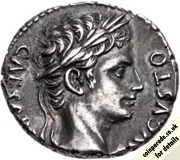 | Augustus (Emperor 27BC-14AD) | |
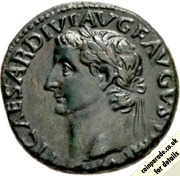 | Tiberius (Emperor 14AD-37AD) | |
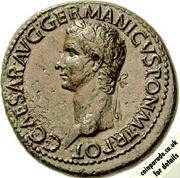 | Gaius (Caligula) (Emperor 37AD-41AD) | |
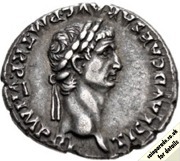 | Claudius (Emperor 41AD-54AD) | |
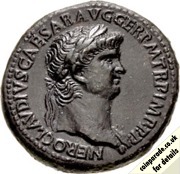 | Nero (Emperor 54AD-68AD) | |
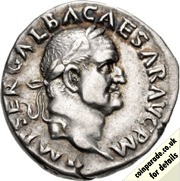 | Galba (Emperor 68AD-69AD) | |
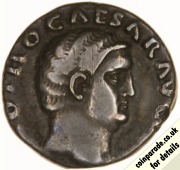 | Otho (Emperor 69AD-69AD) | |
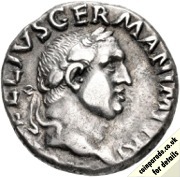 | Vitellius (Emperor 69AD-69AD) | |
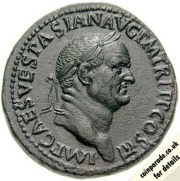 | Vespasian (Emperor 69AD-79AD) | |
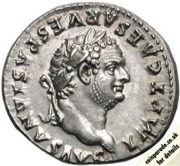 | Titus (Emperor 79AD-81AD) | |
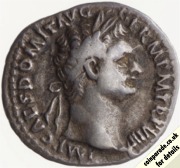 | Domitian (Emperor 81AD-96AD) | |
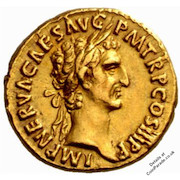 | Nerva (Emperor 96AD-98AD) | |
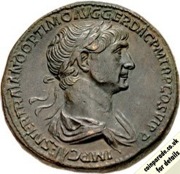 | Trajan (Emperor 98AD-117AD) | |
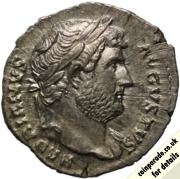 | Hadrian (Emperor 117AD-138AD) | |
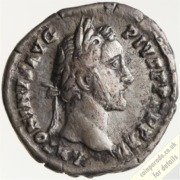 | Antoninus Pius (Emperor 138AD-161AD) | |
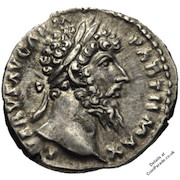 | Lucius Verus (Emperor 161AD-169AD) | |
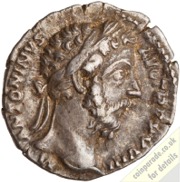 | Marcus Aurelius (Emperor 161AD-180AD) | |
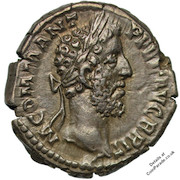 | Commodus (Emperor 177AD-192AD) | |
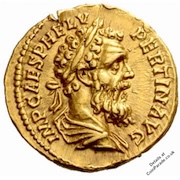 | Pertinax (Emperor 193AD-193AD) | |
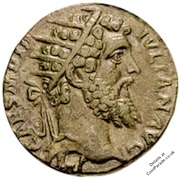 | Didius Julianus (Emperor 193AD-193AD) | |
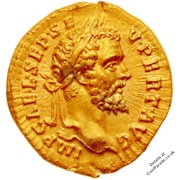 | Septimius Severus (Emperor 193AD-211AD) |
How to collect Roman
The Roman Empire was one of the largest Empires in history, covering most of Europe, Britain, parts of Asia, the Middle East and North Africa. It was in existence from 27BC to 476AD, more than 500 years. And all these places used Roman coins throughout the era.The great part of this is that you can put together a really nice Roman coin collection with very little money, as many coins (although not all) are common and inexpensive. The coins are the best part of 2000 years old and are exciting to collect.
More Information about coins for Collectors
The Roman Empire was one of the largest Empires in history, covering most of Europe, Britain, parts of Asia, the Middle East and North Africa. It was in existence from 27BC to 476AD, more than 500 years. And all these places used Roman coins throughout the era.Originally coins were minted only in Rome, but by the third Century there were mints in other countries too. These mints sometimes produced more than 2 million coins per month to meet demand. Coins typically depicted the Emperor on one side and some other image or letters on the other. During the Empire, more than 10,000 different types of coins were created using copper, silver and gold.
Roman coins are usually classified as:
- Roman Republican Coins (about 300BC - 27BC)
- Roman Imperial Coins (27BC - 96AD)
- Roman Imperial Coins (96AD - 235AD)
- Roman Imperial Coins (235AD - 476AD)
- Roman Provincial Coins
The Denarius was the standard Roman silver coin and there were a range of others. As a guide, in the early republic (after 211BC) there was the Sestertius (=4 denarii), Dupondius (=5), As (=10, a tenner), Semis (=20), Quincunx (=24), Triens (=30), Quadrans (=40), Uncia (=120) and Solidus (=1000, it was gold). Values fluctuated later due to debasement and inflation.
The exchange values were as follows:
1 gold aureus = 25 silver denarii
1 silver denarius = 16 copper asses
1 brass sestertius = 4 copper asses
1 brass dupondius = 2 copper assses
1 copper as = 2 copper semisses (or 4 copper quadrantes)
The standard gold coin was the Aureus and was equal to 25 denarii or 100 sestertii. It's not far off the weight of a modern gold sovereign. The Aureus was introduced by Julius Caesar around 49BC and was the principal gold coin until about the 4th century when it was replaced by the gold Solidus.
The great part of this is that you can put together a really nice Roman coin collection with very little money, as many coins (although not all) are common and inexpensive. The coins are the best part of 2000 years old and are exciting to collect.
For more information see our articles: